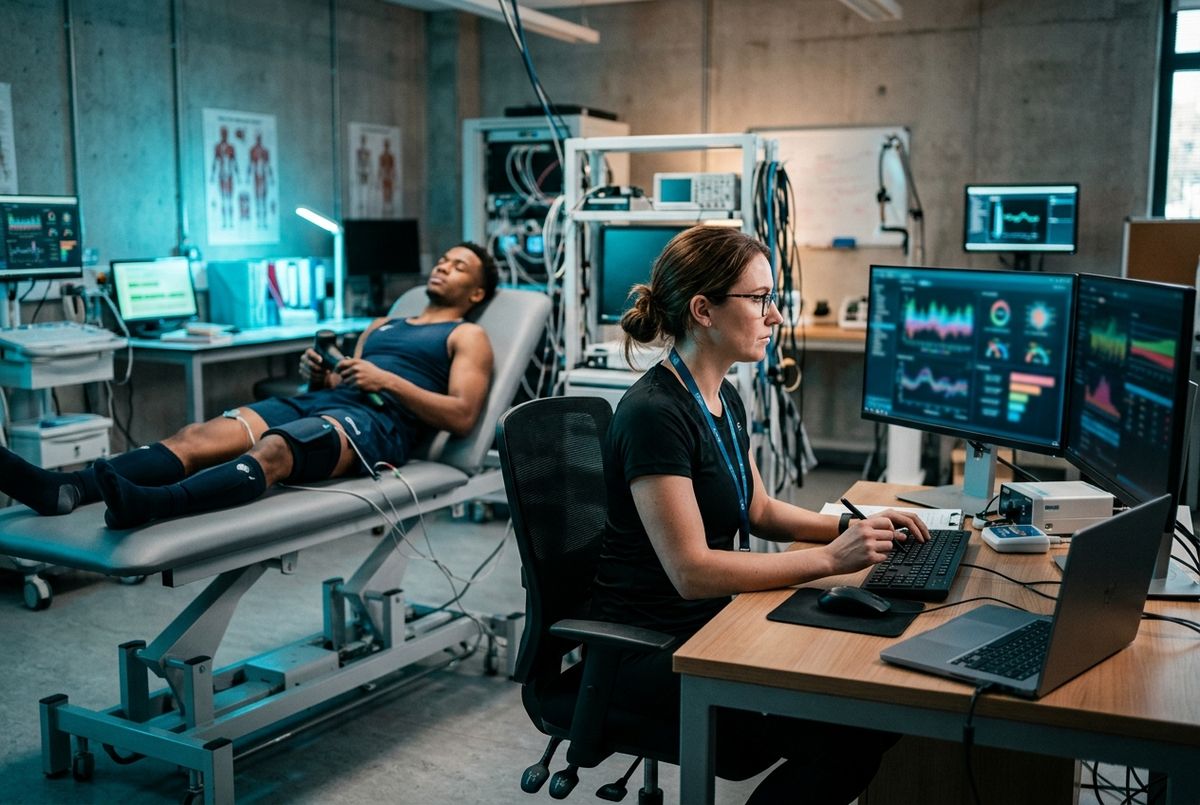
Recovery is the most under-coached, over-marketed area in sport. Every gym sells you the workout. Almost nobody teaches you how to recover from it. And yet recovery is where adaptation happens — the time between training sessions is when your body actually gets stronger, not the session itself. Get recovery right and a moderate training program produces excellent results. Get it wrong and the best training program in the world plateaus.
This is the complete protocol guide we use with 30+ NFL athletes, NCAA programs, and Olympic champions. Twelve recovery techniques, ranked by impact, with the science behind each and a clear "when to use" guide. It's the same framework used in our best recovery techniques guide — expanded with sport-specific modifiers and the modern modalities that have entered the conversation in the last three years.
The Recovery Hierarchy — What Actually Matters Most
Before we get to the twelve techniques, here's the brutally honest hierarchy. Everything else only matters if the top three are solid:
- Sleep — non-negotiable. 7-9 hours of quality sleep is the single highest-leverage recovery variable. No modality replaces it.
- Nutrition — adequate protein (0.8-1g per pound bodyweight), carb periodization around training, and hydration. Recovery cascades fail without substrate.
- Training periodization — programming sufficient deload weeks and varying load. Recovery happens in the programming, not just between sessions.
Now the twelve techniques — most of which sit downstream of those three foundations.
1. Oxygen Nanobubble Hydrotherapy — The Foundation Modality
What it is: warm-water immersion in nanobubble-oxygenated water (~70-120nm bubble diameter, 300M+ bubbles/mL). Oxygen diffuses transdermally into tissue, supporting mitochondrial recovery and reducing local hypoxia in damaged muscle.
Why we rank it #1 modality: 46% faster recovery in the Rice University study, no muscle-adaptation blunting (unlike cold immersion), compliance is high because the experience is enjoyable, daily-use economics are reasonable with home systems. 30+ NFL athletes use this as their daily foundation.
Protocol: 30-60 minutes, 3-7x/week depending on training load. Oxygen baths using a system like NanoJet Eco work in any standard bathtub.
2. Quality Sleep + Sleep Architecture
Recovery happens overnight. Specifically, slow-wave sleep (deep NREM) is where growth hormone peaks, glymphatic clearance flushes metabolic waste, and protein synthesis occurs. REM sleep handles motor consolidation. You need both — and adequate total time.
Targets: 7-9 hours total, 1.5-2h slow-wave, 1.5-2h REM. Track with a Whoop, Oura, or Garmin to know if you're hitting them.
Quick wins: 65-68°F bedroom, no screens 60 min before bed, consistent wake time (more important than consistent bedtime).
3. Protein Distribution + Nutrient Timing
Total protein matters (0.8-1g per pound bodyweight), but distribution matters too: 0.3-0.4g per pound per meal across 4-5 meals beats backloading. Post-training: 30-50g protein within 2 hours plus carbs to replenish glycogen.
4. Active Recovery (Zone 2)
30-45 minutes of conversational-pace aerobic work (HR at 60-70% max) the day after intense training. Builds aerobic base, clears inflammatory markers, and improves capillary density — which improves all other recovery modalities by improving oxygen delivery to tissue.
5. Compression Therapy (Pneumatic / Sleeves)
Normatec-style pneumatic boots or graduated compression sleeves assist lymphatic drainage and venous return after high-volume sessions. Effective but limited to fluid movement — doesn't address cellular-level recovery.
Protocol: 20-30 min post-training or pre-bed. Best paired with oxygen therapy for combined fluid-and-cellular recovery.
6. Contrast Therapy
Alternating warm/hot (3-5 min) and cool/cold (30-60 sec) for 3-4 cycles drives vasodilation/vasoconstriction without the deep cold-immersion exposure that can blunt adaptation. Easier compliance than full cold plunge, decent for circulation.
7. Sauna / Heat Adaptation
15-30 min at 160-195°F drives heat-shock protein production, cardiovascular adaptation, and parasympathetic activation. Strong evidence base from Finnish longitudinal data. Hydration is non-negotiable.
Protocol: 2-4 sessions per week post-training. Avoid sauna in the 2-hour window before critical strength sessions (heat fatigue can impair output).
8. Massage / Soft Tissue Work
Manual massage, percussion guns, foam rolling, and trigger point work reduce muscle tone, increase local blood flow, and address fascial restrictions. Convenient and well-tolerated. Best used as a "removal of restriction" tool rather than primary recovery — clears the path for other modalities to work better.
9. Red Light Therapy (Photobiomodulation)
Red (660nm) and near-infrared (850nm) light supports mitochondrial cytochrome c oxidase activity, modestly reducing inflammation and supporting cellular energy. Penetration is limited to a few centimeters, so it works best for surface-near tissue.
Protocol: 10-20 min sessions, 3-5x/week. Pairs powerfully with oxygen therapy since both target mitochondrial function from different angles.
10. Mobility / Movement Work
Daily 10-15 min of mobility, joint circles, and movement quality work — not stretching for the sake of stretching, but maintaining and restoring movement range under load. Use it as a transitional tool between sessions and during deloads.
11. Breath Work / HRV Training
5-10 min of diaphragmatic or box breathing post-training shifts autonomic balance toward parasympathetic dominance, accelerating heart rate variability recovery. Particularly useful for high-intensity training days that leave the nervous system over-aroused. Free, evidence-based, fits anywhere in the day.
12. Mental Recovery / Stress Management
Chronic psychological stress raises cortisol, blunts testosterone, suppresses immune function, and impairs sleep — all directly anti-recovery. Active stress management (meditation, journaling, time outdoors, social connection) is a real recovery modality, not a luxury. Programs that ignore this consistently produce overtrained athletes.
Sport-Specific Recovery Stacks
HYROX / Hybrid Endurance
Daily oxygen therapy + Zone 2 active recovery 3x/week + compression post-station-day + sauna 2x/week. See our HYROX recovery protocol.
CrossFit
Daily oxygen therapy (post-WOD timing) + protein distribution + sleep priority + massage 1-2x/week + Zone 2 on rest days. Avoid daily cold immersion. See our CrossFit recovery stack.
Running / Endurance
Oxygen therapy daily during base + compression post-long-run + sauna 2-3x/week + mobility daily + heat adaptation cycles in pre-race blocks.
Powerlifting / Strength
Sleep priority (more than running athletes need) + oxygen therapy 4-5x/week + protein hyper-distribution + massage/percussion + minimal cold immersion (blunts gains). Quality > quantity for everything.
Team Sport (Football, Basketball)
Travel-aware: oxygen therapy on every off-day + compression post-game + sleep extension on travel-week + hot/cold contrast in-season + situational HBOT for concussion protocols. Maps to our NFL recovery protocols.
Building Your Weekly Recovery Routine
Here's a template that scales with training volume:
| Day | Training | Recovery Stack |
|---|---|---|
| Mon | Heavy | Oxygen therapy + compression + sleep priority |
| Tue | Skill / Tempo | Oxygen therapy + mobility |
| Wed | Active Recovery | Zone 2 + sauna + oxygen therapy |
| Thu | Heavy | Oxygen therapy + compression + massage |
| Fri | Tempo / Plyo | Oxygen therapy + mobility |
| Sat | Competition / Heavy | Extended oxygen session + compression + early sleep |
| Sun | Rest | Oxygen + sauna + family time + screen detox |
How to Know If Your Recovery Is Working
Don't guess — measure. Three markers that track recovery quality over 4-8 weeks:
- Morning HRV (Whoop / Oura / Garmin): trending up week over week = recovery improving
- Resting heart rate: trending down over 4 weeks = autonomic balance improving
- Subjective readiness: 0-10 daily score. Track patterns, not single days
If those three are stable or improving on increasing training load, your recovery stack is working. If they're degrading, something in the stack needs more attention — usually sleep, nutrition, or training volume.
The Recovery Mistakes That Cost Athletes Years
After working with hundreds of athletes across professional, collegiate, and amateur sport, the recurring mistakes that cost the most time are surprisingly consistent:
- Treating recovery as optional. The athletes who plateau hardest are the ones who treat recovery as "the boring part" between sessions. The ones who break through view it as the main event — training is just the stimulus that earns the recovery.
- Stacking too many modalities, too soon. Buying every gadget at once. Cold plunge, sauna, red light, compression, percussion gun, oxygen system, all in the same month. The athlete is now spending 2 hours a day on recovery and has no idea which inputs are doing anything. Start with the foundation, layer in one modality at a time, measure what works.
- Ignoring the diet pillar. Athletes who underfuel can't recover regardless of modality stack. RED-S (relative energy deficiency in sport) is rampant in endurance and aesthetic sports — and no amount of recovery technology compensates for caloric or protein deficit.
- Chasing the latest hot take. The recovery space is full of cycling fads — cold plunge today, infrared mat tomorrow, hyperbaric next month. The fundamentals (sleep, nutrition, training periodization, oxygen substrate) don't change much. Build on those; treat trendy modalities as accents.
- Not respecting age and life context. A 22-year-old's recovery stack and a 42-year-old's are different. So is a single 24-year-old college athlete vs. a 38-year-old parent with a demanding job. Match the stack to the life, not to the aspirational social-media version of an athlete.
What to Do This Week
- Pick one foundation upgrade. If you're sleeping under 7 hours, fix that. If sleep is solid but you have no daily recovery modality, add one (start with oxygen therapy or Zone 2).
- Audit the stack for redundancy. If you're using 5+ modalities, drop the two you'd miss least. Simplicity compounds.
- Start tracking HRV and resting HR. If you're not already, install a wearable and let it baseline for 2 weeks. You can't optimize what you don't measure.
- Plan one deload week per 6-8 weeks. If your program doesn't include intentional deloads, you're walking toward overtraining slowly. Schedule them now.
The Bottom Line
Recovery isn't one thing — it's a stack. The hierarchy starts with sleep, nutrition, and periodization, then layers the twelve techniques above based on your sport, training load, and individual response. Oxygen nanobubble therapy has become the foundation modality across pro and elite sport because it works daily, doesn't blunt adaptation, and supports every other technique in the stack.
If you're ready to install the foundation: explore NanoJet Eco for home use, the commercial HydroLounge for facilities, or browse the full Bimini water catalog. Want a custom protocol built for your sport, schedule, and goals? Book a free consultation — we'll map your training load to a recovery stack that supports it.
The At-Home Recovery System Used by Pro Athletes
Learn the science behind oxygen nanobubble therapy and how 58 named professional & Olympic athletes recover faster.
Frequently Asked Questions
What is the most important recovery technique for athletes?
How many recovery modalities should I use per day?
Is oxygen nanobubble therapy worth it if I already use compression and sleep well?
Should I avoid cold plunge entirely?
Can I do all 12 recovery techniques in one week?
How long until I'll feel a difference from improving my recovery stack?
Experience Oxygen Therapy
Discover how Bimini’s nanobubble technology can transform your recovery and wellness routine.