Cold plunges are everywhere — but they're not the only path to fast recovery. The freezing-water boom has crowded out a quieter, scientifically validated category of recovery modalities that work without the shock, the dread, or the morning willpower battle. For athletes who hate cold (or whose programs can't afford the muscle-adaptation blunting that ice immersion is increasingly linked to), here are seven cold plunge alternatives worth knowing — ranked by how well they hit the same recovery goals as cold immersion without the downsides.
This is the same recovery roadmap used by 30+ NFL athletes, NCAA programs, and Olympic champions who've moved beyond ice baths. Most ended up replacing cold immersion with oxygen-based modalities entirely.
Why Look for a Cold Plunge Alternative in the First Place?
Cold immersion has real evidence behind it — vasoconstriction, reduced perceived soreness, parasympathetic activation. But three problems consistently drive serious athletes to look elsewhere:
- Blunted muscle adaptation. A 2015 study in The Journal of Physiology (Roberts et al.) showed that regular post-exercise cold-water immersion attenuated long-term gains in muscle mass and strength compared to active recovery. For athletes training for hypertrophy or power, that's a hidden cost.
- Compliance. The Whoop journal data is consistent across hundreds of thousands of users: cold plunge has one of the highest reported "I should do this more" gaps in the wearable industry. People avoid it.
- Cycle-phase issues for female athletes. Cold immersion's effectiveness varies meaningfully across the menstrual cycle. Cycle-aware recovery requires a more consistent modality.
So what works as well — or better — without those tradeoffs? The seven below, ranked.
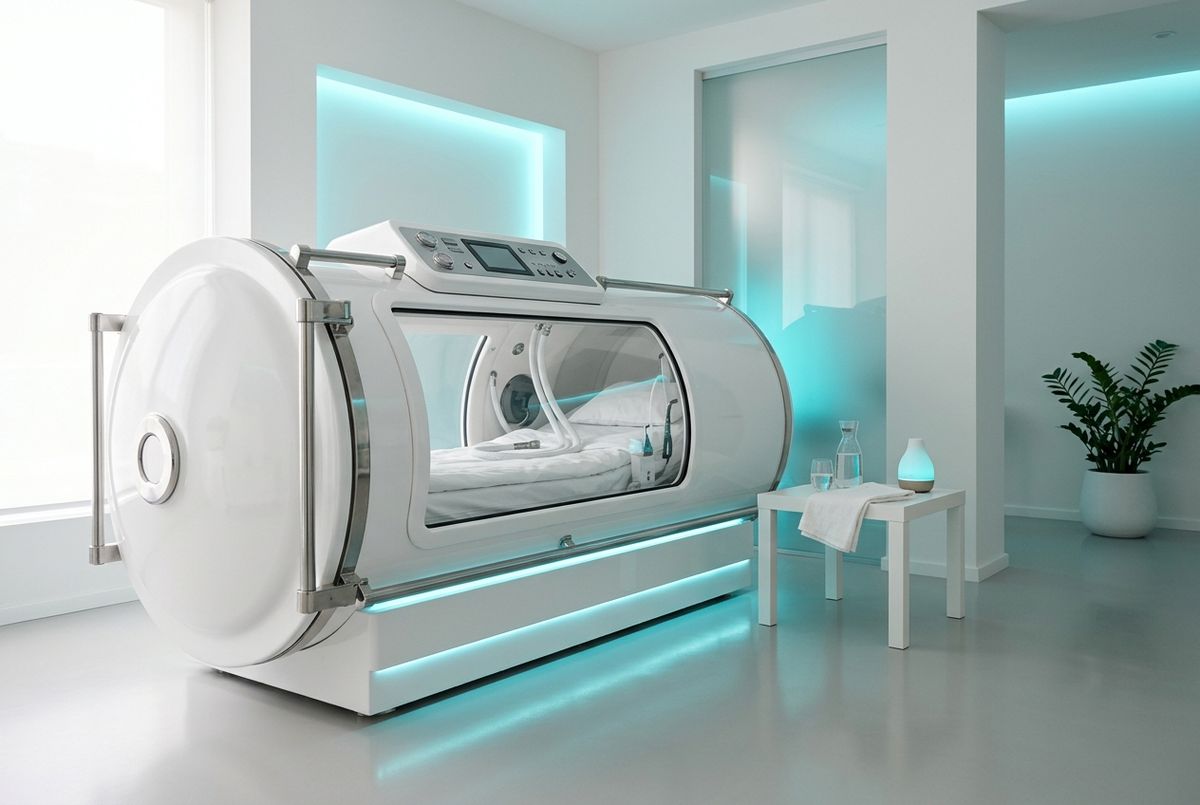
1. Oxygen Nanobubble Hydrotherapy (the modern replacement)
What it is: warm-water immersion infused with oxygen nanobubbles (~0.01 microns — 5,000 times smaller than a typical skin pore), which diffuse transdermally into muscle tissue. Bimini's NanoJet Eco generates 300M+ nanobubbles per mL.
Why it works as a cold-plunge alternative:
- Same anti-inflammatory effect (oxygen reduces ROS production at mitochondria) without the cold-shock cortisol spike
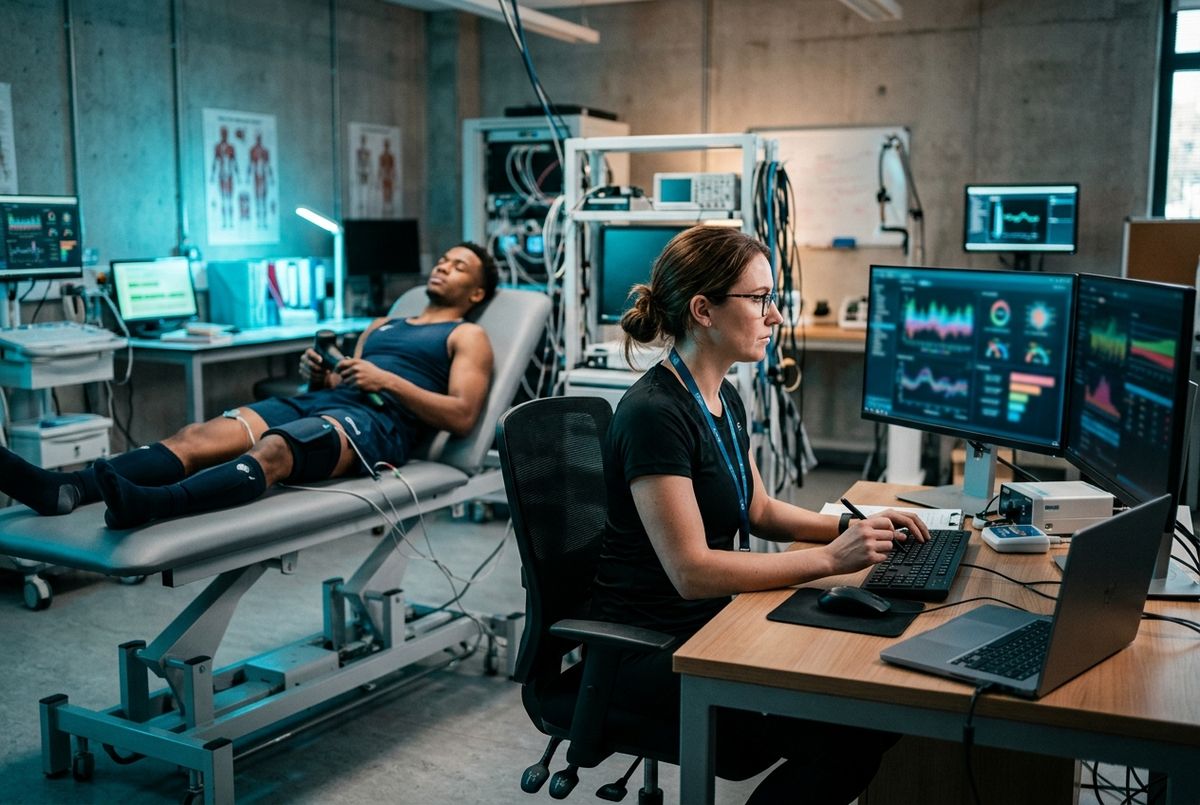
- No muscle-adaptation blunting — the Rice University study showed 46% faster recovery with no observed strength-gain interference
- Works every cycle phase, every season, every emotional state
- 30-60 minute sessions you can actually look forward to instead of 11-15 minutes shivering
Reality check: NanoJet systems start at $9,650 (Eco). That's higher than a $300 cold plunge tub upfront, but cold plunges depreciate fast and the ROI curve flips inside 18 months for athletes training daily. See our full cold plunge vs oxygen therapy breakdown for the comparison math.
2. Contrast Therapy (Hot/Cold Cycling)
What it is: alternating 3-5 minutes hot water with 30-60 seconds cold water for 3-4 cycles. Mimics vasodilation/vasoconstriction without the full cold-immersion exposure.
Pros: still gets you parasympathetic activation, lower psychological barrier than pure cold plunge, decent for circulation. Cons: still requires cold tolerance, still blunts some adaptation if cold cycles are long, requires two setups.
3. Sauna (Heat Adaptation)
What it is: dry or infrared heat at 150–195°F for 15-30 minutes. Drives heat-shock protein production, cardiovascular adaptation, and parasympathetic recovery.
Pros: extensive evidence base (Rhonda Patrick has built a career citing the Finnish sauna longevity data), low equipment cost. Cons: no direct anti-inflammatory effect on muscle tissue (heat is systemic, not targeted), dehydration risk, time-intensive for daily use.
4. Compression Therapy (Normatec / Air Relax)
What it is: pneumatic compression boots/sleeves that pulse air pressure rhythmically up the limb to assist lymphatic drainage and venous return.
Pros: passive, well-tolerated, no skin-contact issues, easy compliance. Cons: only addresses fluid/lymph movement — does nothing for cellular-level oxygenation or systemic recovery. Most effective as a complement to oxygen therapy, not a replacement. See how the two stack in our recovery modality showdown.
5. Massage / Percussion (Theragun, Hypervolt)
What it is: mechanical pressure or vibration applied to soft tissue to reduce muscle tone, increase local blood flow, and break up fascial restrictions.
Pros: convenient, portable, immediate subjective relief, time-tested. Cons: localized effect only, doesn't address whole-body recovery, requires manual operation (or a therapist's cost). Pairs well with everything else.
6. Red Light Therapy (Photobiomodulation)
What it is: red and near-infrared LED light (typically 660nm + 850nm) applied to skin to stimulate mitochondrial cytochrome c oxidase activity.
Pros: passive, non-invasive, growing evidence base for inflammation reduction and cellular energy support. Cons: penetration depth is limited (a few centimeters), full-body sessions take 15-20 min, units cost $400-$2,000+. Best stacked with oxygen therapy since both target mitochondrial function from different angles.
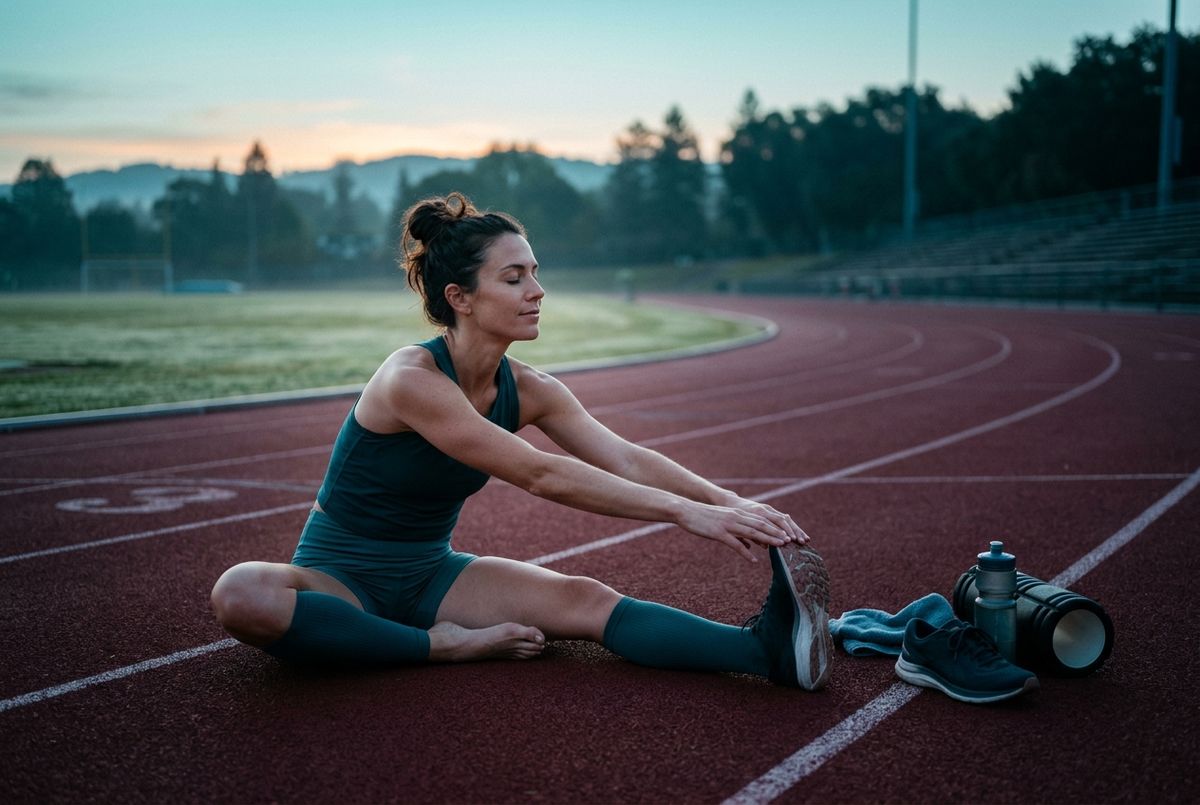
7. Active Recovery (Zone 2 Cardio + Mobility)
What it is: 30-45 min of conversational-pace cardio (HR 60-70% max) + dynamic mobility work the day after intense training.
Pros: free, evidence-based, builds aerobic base in parallel with recovery, no equipment. Cons: requires time and discipline, doesn't help if you're already volume-overloaded, no direct cellular intervention.
Quick Comparison: Cold Plunge vs. The Seven Alternatives
| Modality | Anti-Inflammatory | Adaptation-Safe | Compliance | Cost (entry) |
|---|---|---|---|---|
| Cold Plunge | High | Mixed (blunts gains) | Low | $300+ |
| Oxygen Nanobubble | High | Yes | High | $9,650+ |
| Contrast Therapy | Medium | Mixed | Medium | $500+ |
| Sauna | Low-Med | Yes | Medium | $2k+ |
| Compression | Low | Yes | High | $800+ |
| Percussion | Low | Yes | High | $200+ |
| Red Light | Medium | Yes | Medium | $400+ |
| Active Recovery | Medium | Yes | Low | $0 |
The Pro Athlete Pattern
Across 30+ NFL athletes, NCAA programs, and Olympic champions we work with, the modality pattern is consistent: 1-2 modalities used daily as the foundation, 2-3 used weekly as accent, and 1-2 used situationally for travel/competition. The daily-foundation slot is increasingly oxygen-based — the nanobubble recovery protocol works in every cycle phase, every season, and pairs cleanly with everything else on the list.
Common Mistakes When Switching Off Cold Plunge
The transition off daily cold immersion is where most athletes lose ground temporarily before settling into a better long-term protocol. Five mistakes worth dodging:
- Quitting cold cold-turkey with no replacement. If you've been cold-plunging daily, removing it without inserting a replacement modality leaves a recovery gap. Your body adapted to that input. Replace it with oxygen therapy on day 1 — don't ride a 2-week recovery debt.
- Going harder in training because "recovery is no longer blunted." Tempting, but unwise. Hold training load constant for 4-6 weeks while you measure the actual recovery improvement. Then add load.
- Believing "no cold = no inflammation control." Anti-inflammatory effects come from multiple mechanisms — cold is one route, but warm-water oxygen therapy, sauna, and proper sleep all deliver the same biological signal through different pathways.
- Skipping the active-recovery layer. Cold-plunge users often skipped Zone 2 because cold "felt like enough." It wasn't. Active recovery is the cheapest, most evidence-backed modality in this list — make sure it's still in your week.
- Not measuring the change. Use HRV, resting HR, and subjective readiness to track whether the new stack is actually working. Trust the data more than the discomfort-craving voice in your head.
Implementation Roadmap (First 30 Days)
Week 1-2: Install one new modality. If you don't yet have an oxygen-based foundation, start there. Do 30-60 minute sessions 3x/week and track subjective recovery and HRV.
Week 3-4: Layer in 2-3 weekly accents (sauna twice weekly, compression post-heavy sessions, percussion as needed). Don't overcorrect — the goal is consistency, not maximum density.
Day 30: Compare your 30-day average HRV to your prior baseline. If trending up, you're on track. If flat or down, examine whether training load or sleep has shifted; recovery modalities only work when the foundation is solid.
How to Pick Your Stack
For most athletes, the optimal stack is:
- Daily: Oxygen nanobubble therapy (30-60 min) + Zone 2 cardio (3-4 days/week)
- Weekly (2-3x): Sauna or red light
- Post-heavy-session: Compression boots or percussion
- Race / competition only: Contrast therapy or targeted ice for acute injury
The throughline: instead of fighting your physiology with cold shock, you're supporting it with oxygen substrate, gentle heat, and movement. Compliance goes up. Recovery quality goes up. Adaptation isn't blunted.
The Bottom Line
Cold plunge isn't bad — it's just not the only path, and for most serious athletes the tradeoffs don't justify it. The seven alternatives above range from free (active recovery) to premium (oxygen nanobubble therapy), but they all share one quality cold plunge lacks: they don't blunt the training adaptation you worked so hard to earn.
If you're ready to test the modern replacement, explore NanoJet Eco for home recovery or check the Bimini recovery catalog for facility-grade systems. Or skip ahead and book a free consultation — we'll build a recovery stack that fits your sport, schedule, and budget without making you stand in ice water.
Quick Glossary — Recovery Terms Worth Knowing
- Vasoconstriction: the narrowing of blood vessels — what cold immersion induces to reduce local blood flow temporarily. Triggers a rebound vasodilation when you warm up.
- Parasympathetic activation: shifting the nervous system into "rest and digest" mode — the state where actual recovery happens. Cold, heat, and warm-water immersion all drive this through different inputs.
- DOMS (Delayed-Onset Muscle Soreness): the deep ache 24-72 hours after unfamiliar or heavy training. Caused by microtrauma to muscle fibers, not lactic acid buildup.
- HRV (Heart Rate Variability): the variation in time between heartbeats. Higher HRV = better autonomic recovery. Tracks how well your nervous system is bouncing back day to day.
- Mitochondrial biogenesis: the cellular process of creating new mitochondria. The actual mechanism behind aerobic adaptation and one of the most important downstream effects of consistent oxygen-supported recovery.
The At-Home Recovery System Used by Pro Athletes
Learn the science behind oxygen nanobubble therapy and how 58 named professional & Olympic athletes recover faster.
Frequently Asked Questions
What is the best alternative to a cold plunge?
Does cold plunging really blunt muscle gains?
Can I use oxygen therapy and cold plunge together?
What's the cheapest cold plunge alternative?
Is contrast therapy better than cold plunge alone?
How do female athletes choose between these alternatives?
Experience Oxygen Therapy
Discover how Bimini’s nanobubble technology can transform your recovery and wellness routine.