Cold Plunge and Ice Bath Alternative: Recover in a Warm Oxygen Bath
One cold plunge alternative many athletes switch to is a warm oxygen nanobubble bath. Instead of 50°F cold shock, the Bimini NanoJet saturates 78-100°F bathwater with oxygen nanobubbles for a comfortable 30-60 minute soak. At Rice University, Associate Athletic Director Dean Miller says 80 to 90% of their athletes switched from cold tubs to Bimini.
Why Athletes Are Looking Beyond the Ice Bath
Cold plunging took over recovery culture — but adherence is its quiet problem. Sessions are short because they have to be, the cold shock is something most people dread, and skipping becomes easy. Meanwhile, research on cold water immersion after strength training suggests it may blunt the muscle protein synthesis signaling your workout was supposed to trigger.
A warm oxygen bath flips the experience: 78-100°F water you can actually stay in for 30-60 minutes, with oxygen nanobubbles suspended in the water throughout the soak. It's a recovery session people look forward to — which is why programs like Rice University saw 80-90% of athletes move off cold tubs within two years.
Cold Plunge vs Oxygen Bath: Side by Side
| Feature | Bimini Oxygen Bath | Cold Plunge |
|---|---|---|
| Water temperature | 78-100°F — warm and comfortable | 39-59°F — cold shock |
| Session length | 30-60 minutes, relaxed | 2-10 minutes, tolerance-limited |
| Blood flow response | Vasodilation — circulation increases | Vasoconstriction — circulation restricted |
| After strength training | No known interference with muscle adaptation | May blunt muscle protein synthesis within 4 hours |
| Oxygen delivery | Oxygen nanobubbles suspended in the water | None |
| Alertness / wake-up effect | Mild — most users feel relaxed | Strong CNS arousal — cold wins here |
| Daily adherence | Easy to repeat daily — no dread factor | Often dreaded and skipped |
| Equipment | NanoJet Eco + your standard bathtub | Plunge tub, chiller, filtration |
The Bimini NanoJet is a wellness device, not a medical device. Different routines, settings and experiences — not medical claims. For the deep-dive comparison, read cold plunge vs oxygen nanobubble therapy.
What the Research Says About Cold Water Immersion
Cold water immersion research is genuinely mixed. On the positive side, studies support a strong central-nervous-system arousal effect — the post-plunge alertness people love is real. Cold immersion can also reduce the perception of soreness in the hours after hard efforts.
The complication is timing around strength work: several studies suggest cold water immersion within about 4 hours of resistance training may suppress muscle protein synthesis signaling — the adaptation your training session was meant to produce. That's why many strength coaches now keep cold exposure away from lifting days.
Warm-water immersion research points the other way for comfort and circulation: warm soaks are associated with vasodilation, relaxation and easier pre-sleep wind-down. Bimini's own human data — a Rice University Sports Medicine pilot (10 participants, internal white paper, not a peer-reviewed trial) — reported improvements in reaction-time and coordination scores in roughly 46% of post-session tests. See our guide to cold plunge alternatives for the wider landscape.
How a Warm Oxygen Bath Session Works
Fill your standard bathtub with warm water at whatever temperature is comfortable — most users land between 78 and 100°F. The NanoJet Eco sits beside the tub, plugs into a normal 110V outlet, and infuses the water with oxygen nanobubbles small enough (0.005-0.02 microns) to stay suspended for your whole soak.
Sessions run 30-60 minutes. No tolerance-building, no timers counting down the pain, no chiller maintenance. Just a warm bath with oxygen in the water.
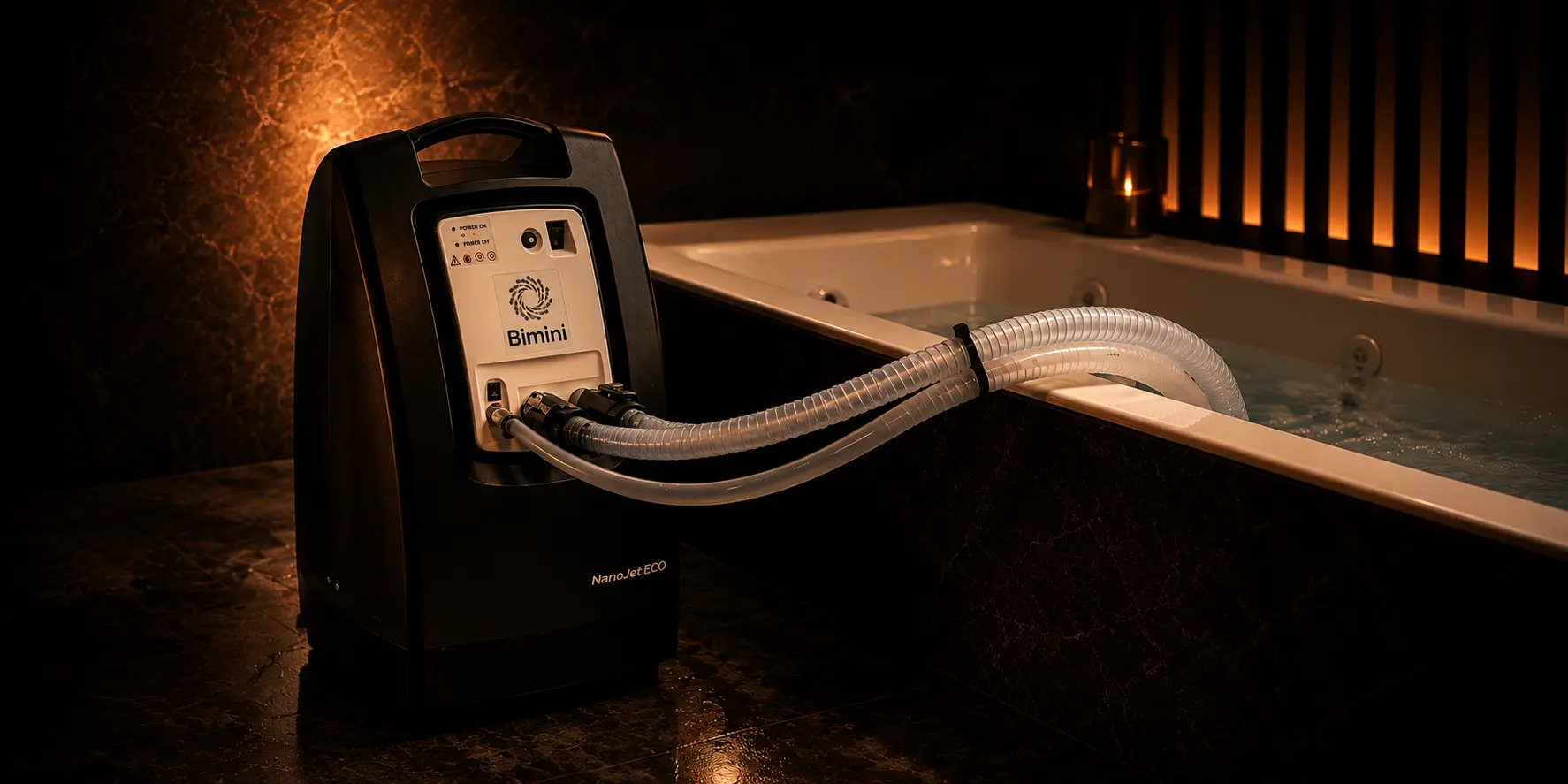
Using Both: Cold for Alertness, Oxygen Bath for Recovery
This isn't all-or-nothing. Plenty of athletes keep a short cold plunge in the morning for the wake-up effect, and use the warm oxygen bath after training or in the evening as their recovery soak — away from the post-lifting window where cold may blunt adaptation.
Choose a routine with your qualified health or training professional, particularly if you have a medical condition.
Cold Plunge Alternative FAQ
Is there a better alternative to cold plunge for muscle recovery?
A warm oxygen nanobubble bath is the main warm-water alternative to cold plunges. Instead of cold shock and vasoconstriction, the Bimini NanoJet saturates warm bathwater with oxygen nanobubbles for a comfortable 30-60 minute soak. Different routines, settings and experiences — at Rice University, Associate Athletic Director Dean Miller says 80 to 90% of their athletes switched from cold tubs to Bimini.
Do cold plunges hurt muscle growth?
Research suggests cold water immersion within 4 hours of strength training may blunt muscle protein synthesis signaling. This means the muscle-building adaptation from your workout could be suppressed. A warm oxygen bath offers a different routine, setting and experience with no known interference with that adaptation.
Can I use both cold plunge and oxygen therapy?
Yes. Many athletes use cold plunge for its CNS arousal and alertness benefits while using a warm oxygen nanobubble bath as their recovery soak. Choose a routine with your qualified health or training professional, particularly if you have a medical condition.
What temperature is an oxygen bath?
Whatever is comfortable for you to soak in for 30-60 minutes — most users prefer 78-100°F. The oxygen nanobubble delivery works at any temperature in this range, so there is no cold shock and no tolerance-building required.
Try an Oxygen Bath
Experience a warm oxygen soak at a partner facility near you, or bring it home with the NanoJet Eco.
Get the Science of Transdermal Oxygen
How nanobubble oxygen delivery works, the Rice University study, and setup basics — free PDF
Explore More
Related pages you might find useful