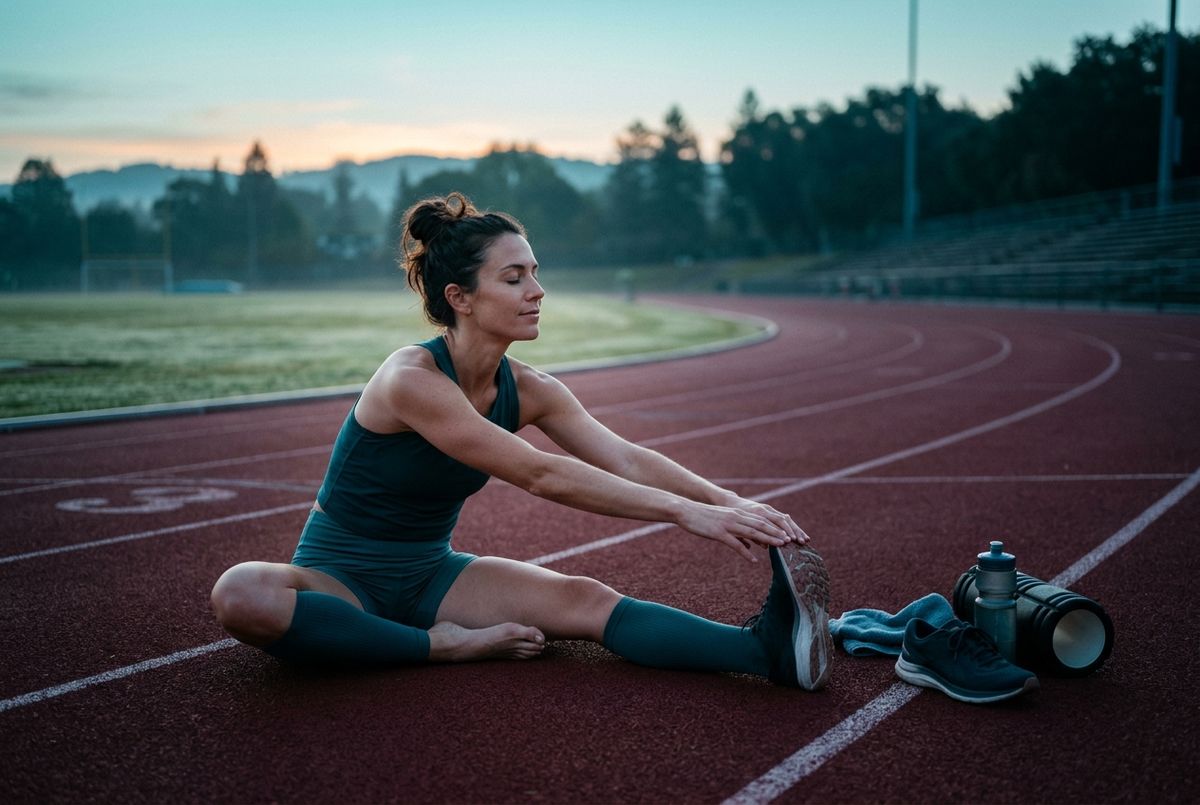
Microcirculation is blood flow through your smallest vessels — the arterioles, capillaries, and venules that make up the vast majority of the roughly 60,000 miles of blood vessels in an adult body. It is easy to focus on the heart and big arteries, but the actual handoff of oxygen and nutrients to your cells happens in vessels thinner than a human hair. For recovery, that handoff is everything: muscle repairs itself with the oxygen and building blocks the capillary network can deliver.
What capillary density means — and why it matters for recovery
Capillary density describes how many capillaries surround each muscle fiber (often reported as the capillary-to-fiber ratio). Higher density means more surface area for exchange and a shorter diffusion distance from blood to mitochondria. Practically, a denser network lets you:
- Deliver more oxygen to working muscle at a given heart rate,
- Clear metabolic byproducts like carbon dioxide and hydrogen ions faster,
- Supply repair processes between sessions more effectively.
Endurance-trained athletes commonly show 20–40% higher capillary-to-fiber ratios than untrained people — one of the quiet adaptations behind their ability to train hard and recover quickly. It is also a key link in the chain that feeds your mitochondria; see our companion guide to mitochondrial health and cellular energy.
How training grows new capillaries
The process is called angiogenesis. When muscle works, blood flow and shear stress across vessel walls rise, and oxygen tension in the tissue falls. Both signals activate growth factors — most notably VEGF (vascular endothelial growth factor) — which direct the sprouting of new capillaries from existing ones.
- Steady endurance work is the classic stimulus: sustained elevated blood flow over 30–60 minutes strongly activates the shear-stress pathway.
- Intervals contribute through repeated bouts of high flow and transient local hypoxia.
- Consistency wins. Measurable increases in capillary density typically appear after 4–8 weeks of regular training and keep developing over months. The adaptation also reverses with prolonged inactivity — the network is maintained by use.
What impairs microcirculation
Several common factors degrade small-vessel function long before they show up as disease:
- Sedentary time. Long uninterrupted sitting reduces shear stress, and endothelial function measurably declines within hours. Brief movement breaks — even one-minute exercise snacks — largely prevent the drop.
- Smoking and high blood glucose, both of which damage the endothelium, the single-cell lining that regulates vessel dilation.
- Aging without training. Capillary density and endothelial responsiveness decline with sedentary aging — but much less so in people who stay aerobically active.
- Chronic low-grade inflammation, which alters endothelial signaling. We cover the distinction between harmful chronic inflammation and normal training inflammation in inflammaging vs exercise inflammation.
Supporting blood flow between workouts
Between sessions, the goal is simple: keep blood moving through the network while the muscle repairs. Evidence-supported options include:
- Easy movement — walking, easy cycling, mobility work — the muscle pump physically drives flow through capillary beds.
- Warm-water immersion. Heat causes vasodilation: vessels near the skin and in superficial muscle widen, and local blood flow increases during and shortly after the soak. This is one mechanism behind hot water's long history as a recovery practice — explored in depth in our hot water immersion guide.
- Massage and compression, which show modest circulatory and perceived-recovery benefits in meta-analyses.
By contrast, cold-water immersion causes vasoconstriction — narrowing vessels and reducing local flow — which is one reason many athletes now reserve it for specific situations rather than daily use. See cold plunge vs oxygen bath for the comparison.
Oxygen nanobubbles and the microcirculation story
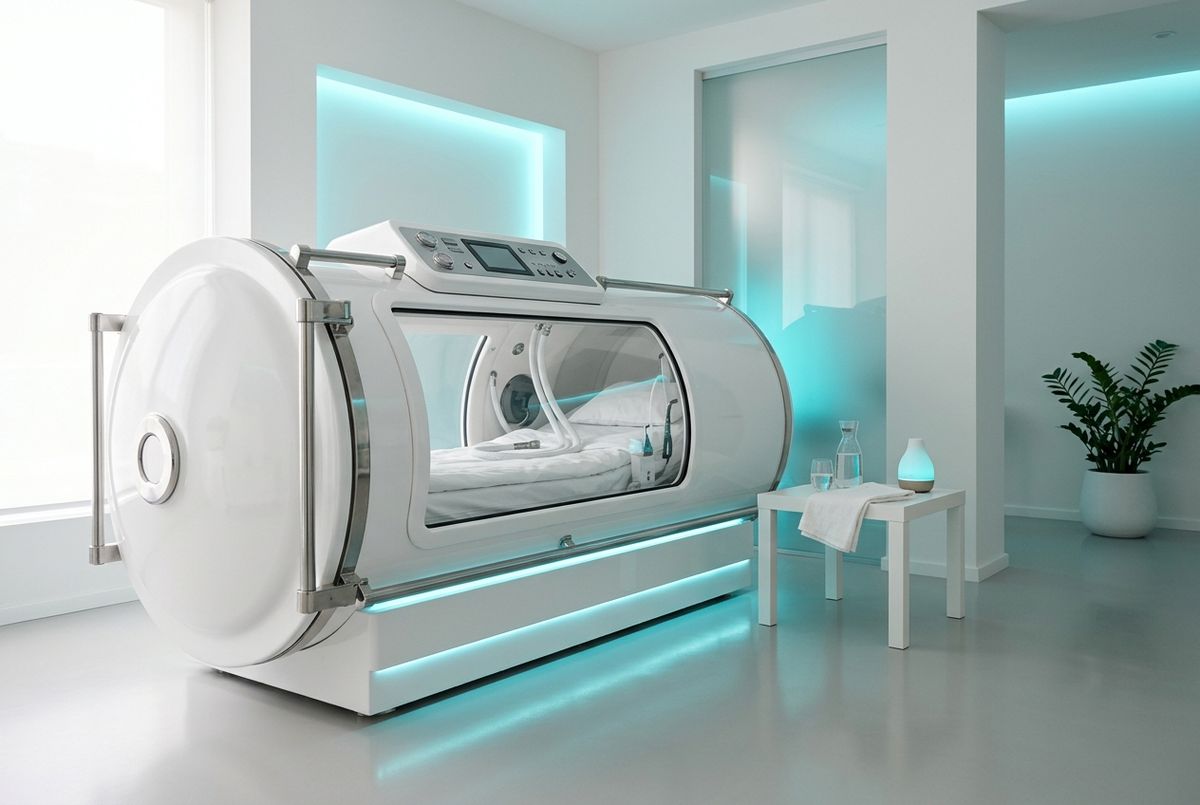
Bimini's NanoJet systems combine warm-water vasodilation with transdermal oxygen delivery: the water carries 300 million oxygen nanobubbles per milliliter, each under 0.1 microns — roughly 2,500x smaller than a human skin pore. In a peer-reviewed Rice University study of 100+ collegiate athletes, sessions were associated with 43–46% improvements in measured performance and recovery metrics, with NIRS sensors recording substantial rises in muscle oxygen saturation during immersion. The full protocol and results are covered in our Rice University study breakdown, and the delivery mechanism in how it works.
How microcirculation is measured
Researchers and clinicians assess small-vessel function several ways, and knowing them helps when reading studies:
- Near-infrared spectroscopy (NIRS) — sensors on the skin estimate oxygen saturation in the muscle below, capturing how well supply matches demand in real time. This is the method used to track muscle oxygenation in the Rice University immersion study.
- Flow-mediated dilation (FMD) — ultrasound measures how much an artery widens after a period of restricted flow, a standard index of endothelial health.
- Capillaroscopy and biopsy counts — direct visualization or tissue sampling used in research to quantify capillary-to-fiber ratios.
For self-tracking, the honest proxies are performance-based: pace at a fixed heart rate, how quickly breathing settles between intervals, and heart rate recovery trends over weeks.
Aging and capillary rarefaction — use it or lose it
With sedentary aging, the capillary network thins — a process called rarefaction. Fewer capillaries per fiber means longer diffusion distances, lower peak oxygen delivery, and slower clearance of metabolic byproducts; rarefaction is also implicated in the age-related decline of muscle quality (covered in muscle quality vs muscle size). The encouraging finding: angiogenesis remains responsive at every age studied. Trials in adults in their 60s, 70s and beyond show weeks-to-months of endurance training measurably increases capillarization — the network rebuilds when the demand signal returns.
A simple weekly plan for the network
- 2–4 endurance sessions of 30–60 minutes at a conversational pace — the primary angiogenesis stimulus.
- 1–2 harder interval sessions for the high-flow, transient-hypoxia signal.
- Movement breaks on desk days — a brief walk or stair climb every hour protects endothelial function between workouts.
- Warmth for comfort and flow — a warm soak after hard sessions or in the evening supports circulation while you recover.
Nutrition and hydration for the small vessels
Diet cannot substitute for training-driven angiogenesis, but several inputs have credible vascular evidence:
- Dietary nitrates (beetroot, leafy greens) convert to nitric oxide — the endothelium's own dilation signal — with measurable acute effects on blood flow and exercise economy in trials.
- Cocoa flavanols and polyphenol-rich foods have improved flow-mediated dilation in controlled studies; effects are modest but consistent.
- Omega-3 fats support endothelial function and sit within the same Mediterranean-pattern evidence base that tracks with lower vascular inflammation.
- Plain hydration — even mild dehydration reduces plasma volume, thickening blood and raising cardiovascular strain for the same work. It is the cheapest circulation upgrade available.
Pattern over products: the vegetables-fish-olive-oil eating style keeps reappearing because it supports the endothelium from multiple directions at once.
The takeaway
Capillaries are where recovery is actually supplied. Endurance training grows the network, movement and warmth keep flow high between sessions, and the habits that damage the endothelium — long sitting, smoking, chronically elevated glucose — quietly shrink it. Train the network, then use it: gentle movement and comfortable warm immersion are the lowest-effort ways to keep oxygen and nutrients moving to muscle that is trying to rebuild. More evidence-first guides live in our Functional Longevity Hub.
Editorial sources
- Hellsten & Nyberg, Cardiovascular adaptations to exercise training — Comprehensive Physiology
- Prior et al., What makes vessels grow with exercise training? — Journal of Applied Physiology
- Restaino et al., Impact of prolonged sitting on peripheral and central vascular health
Bimini systems are wellness devices, not medical devices, and are not intended to diagnose, treat, cure, or prevent any disease. If you have a medical condition or concerning symptoms, seek qualified medical guidance.
Get the Longevity Test Checklist
10 repeatable functional tests — heart rate recovery, grip strength, chair stand, balance, VO2 max and more — with a baseline/retest tracker.
Frequently Asked Questions
What is microcirculation?
Can you increase capillary density?
How long does capillarization take?
Does warm water improve circulation?
Experience Oxygen Therapy
Discover how Bimini’s nanobubble technology can transform your recovery and wellness routine.