Transdermal oxygen therapy delivers oxygen through topical application to areas of muscle soreness. Modern systems use continuous topical delivery to the affected area. Let's break down how it works, what the research actually says, and whether it's worth adding to your recovery routine.
The basic idea is simple: during recovery, your body uses oxygen as part of its natural processes. By applying oxygen directly to an area through your skin, you're providing a specific compound to the target area. Let's explore how it works and what you should know.
How Transdermal Oxygen Therapy Works
Transdermal oxygen therapy works by increasing the oxygen supply available to muscle tissue in the treatment area. When you work out, your muscles experience stress and your body initiates its natural response. Your body uses oxygen as part of this process, and blood flow to the area plays a role in this natural function.
Related: Oxygen Therapy for Faster Muscle Recovery: How It Works
Related: Oxygen Water Therapy vs Ice Baths: Which Works Better?
A transdermal oxygen system applies oxygen directly to the skin over the target muscle. The oxygen molecules penetrate the skin barrier and reach the underlying tissue. This is different from wearing a compression sleeve or taking a hot bath, because you're actively delivering a specific compound to the exact spot.
The key feature is continuous delivery. Instead of a one-time application, modern systems provide steady, uninterrupted oxygen flow for as long as you're using them. That means your muscle tissue receives consistent oxygen supply throughout your use window.
Oxygen and Muscle Function
Your muscles use oxygen as part of their normal function and natural recovery processes. When you stress muscle fibers through exercise, your body initiates its natural response to rebuild tissue. This process involves various biological mechanisms that rely on oxygen availability.
Research into oxygen delivery systems has examined their ability to increase oxygen availability to tissue. Small clinical trials and larger randomized controlled trials have evaluated topical oxygen approaches. The results indicate that increasing oxygen availability to tissue can support your body's natural processes, though individual study sizes have been relatively small and more research is ongoing.
Related: Oxygen Therapy for Plantar Fasciitis: Natural Healing Support
The mechanism is straightforward: more oxygen in the tissue means your cells have access to better raw materials for their natural functions. This doesn't mean results happen instantly, but it does mean your body has better conditions to work with.
Transdermal Oxygen vs. Other Methods
You have various options for supporting muscle function: ice baths, compression, stretching, massage, sleep, and nutrition all play a role. Where does transdermal oxygen fit in?
- Ice baths and cryotherapy provide temporary numbing sensations and reduce swelling, but they don't actively deliver anything to your tissue.
- Compression sleeves support blood flow and reduce swelling, but they don't add new oxygen to the area.
- Massage and stretching improve circulation and range of motion, but they're time-intensive and require hands-on work.
- Transdermal oxygen actively supplies oxygen to the treatment area, and it works while you rest or do other things.
A comprehensive approach uses multiple tools. Transdermal oxygen therapy can be used alongside sleep, good nutrition, light movement, and other methods. It's one focused way to support oxygen delivery to a specific area.
Related: Transdermal Oxygen Delivery Technology: How It Works
Types of Muscle Soreness and Application Areas

Transdermal oxygen therapy is designed for application to areas experiencing acute muscle soreness. Acute soreness is that sensation you may experience 24 to 48 hours after intense exercise, especially after trying a new exercise or pushing yourself harder than usual. Your muscle tissue experiences stress, and your body initiates its natural response.
That's the window where topical oxygen can be applied to support your body's natural processes in the affected area.
Transdermal oxygen therapy is designed for acute muscle soreness rather than chronic muscle tightness or tension that comes from poor posture or stress. Those issues may need movement, stretching, and postural correction. It is also not intended for acute injuries like strains or sprains, which may need medical attention and specific rehabilitation protocols.
How to Use Transdermal Oxygen
If you want to try transdermal oxygen therapy, timing and consistency matter. Follow the instructions provided with your specific device.
- Timing. Apply oxygen therapy as soon as you want to begin using it. Refer to your device instructions for recommended timing and frequency.
- Consistency. Follow the usage schedule provided by your device manufacturer. Continuous delivery systems are designed to provide sustained oxygen supply over time.
- Combine with other methods. Use oxygen therapy alongside good sleep, adequate nutrition, hydration, and light movement as part of your overall routine.
- Track your experience. Keep notes on how you feel and your experience with the device. Individual responses vary.
Choosing a Transdermal Oxygen System
When you're shopping for a transdermal oxygen system, consider these features:
- Continuous delivery. You want a system that provides steady oxygen flow. Refer to product specifications for delivery details.
- Portability. If you can't use it easily at home or take it with you, you may not use it consistently. Consider the size and weight of the system.
- Coverage area. Different systems cover different surface areas. Check the specifications to see what area the system is designed for.
- Specifications and warranty. Review the published specifications and warranty information provided by the manufacturer to understand what the system is designed to do.
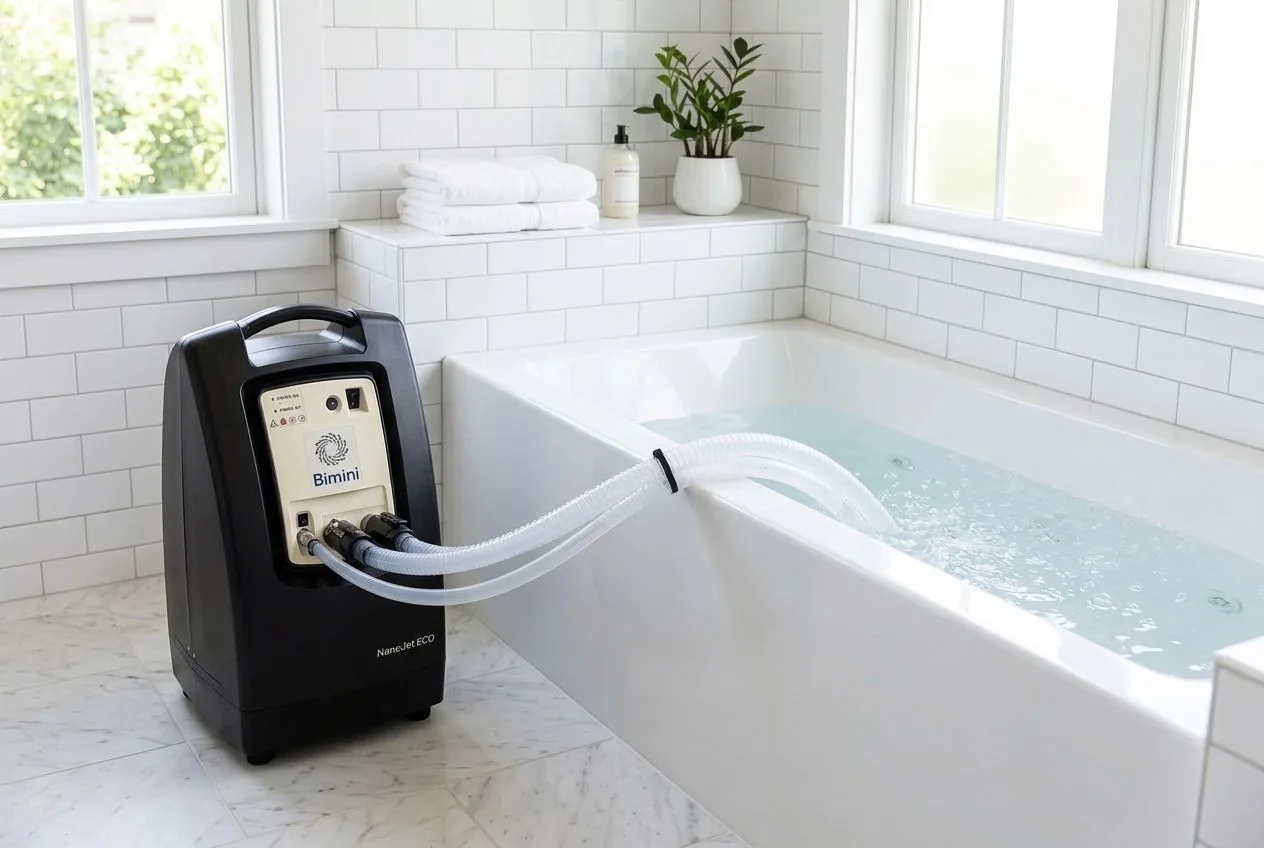
If you're interested in adding transdermal oxygen to your routine, portable oxygen nanobubble systems like the NanoJet Eco offer continuous topical delivery designed for home use. These systems fit into a regular bathtub and provide oxygen application while you soak, making them easy to incorporate into your routine.
What to Expect from Transdermal Oxygen

Transdermal oxygen therapy is designed to increase oxygen availability to the treatment area. Individual experiences vary based on many factors.
This technology is one tool that can be incorporated into your overall routine. It works best as part of a comprehensive approach that includes sleep, nutrition, hydration, and movement.
Think of it as one component of your overall approach to supporting your body's natural processes. It provides oxygen to a specific area, but results depend on many factors including your individual physiology, training intensity, sleep, nutrition, and overall recovery practices.
Is Transdermal Oxygen Right for You
You might consider transdermal oxygen therapy if any of these apply to you:
- You train regularly and experience muscle soreness.
- You're returning to training after a break and want to support your recovery.
- You're interested in exploring advanced recovery tools alongside sleep and nutrition.
- You want a method to support recovery while you rest or do other things.
- You want to explore options beyond ice baths, compression, and stretching.
You might skip it if you're not training regularly, you have limited budget for recovery tools, or you're looking for a substitute for fundamentals like sleep and nutrition. Recovery involves many factors.
For those interested in exploring transdermal oxygen therapy, biminihydrotherapy.com offers systems designed to deliver oxygen continuously, fitting into your routine whether you're at home or running a facility.
Getting Started
If you decide to try transdermal oxygen therapy, start by following the instructions provided with your specific device. Use it consistently for one full cycle and pay attention to your experience. Track how you feel and whether the device fits into your routine.
Combine it with things that support overall recovery: sleep, nutrition, hydration, and light movement. Give it adequate time before deciding whether it's making a difference for you. Individual responses vary, and what works for one person may differ for another.
The goal is finding what combination of tools and practices supports your overall recovery so you can continue training effectively. Transdermal oxygen therapy is one option to explore.
What types of soreness is transdermal oxygen therapy designed for?
Transdermal oxygen therapy is designed for application to areas experiencing acute muscle soreness, particularly soreness that develops 24 to 48 hours after intense exercise. It is not designed for chronic muscle tightness, tension that comes from posture or stress, or acute injuries like strains or sprains. For questions about whether this device is appropriate for your specific situation, consult the device instructions or speak with a qualified healthcare professional.
How quickly might I notice results?
Individual experiences vary. Some people may notice changes within hours of starting use, while others may take longer. The timing depends on many factors including the intensity of your soreness, your individual physiology, and how consistently you use the system. Refer to your device instructions for recommended usage frequency and duration.
Can I use transdermal oxygen therapy daily?
Refer to the instructions provided with your specific device for recommended usage frequency. Follow the manufacturer's guidance on how often and for how long you should use the system.
What should I know about using transdermal oxygen therapy?
Follow all instructions and safety warnings provided with your specific device. If you have open wounds, severe skin conditions, or other health concerns related to the area you want to treat, consult a qualified healthcare professional before use. Refer to your device instructions for complete safety information and proper usage guidelines.